
Originally written by Tarn Currie for Braden Currie.
Dad and I went into French Ridge with a three-day plan: two nights to practise alpine skills, climb Mount French and maybe have a crack at Mount Avalanche. We carried the gear for all of that, and we felt it. By the time we rolled back into Raspberry Flat, we had squeezed the trip into two days, with a summit, a long walk out and a final bike ride helped along by a tailwind.
Location: Mount Aspiring National Park


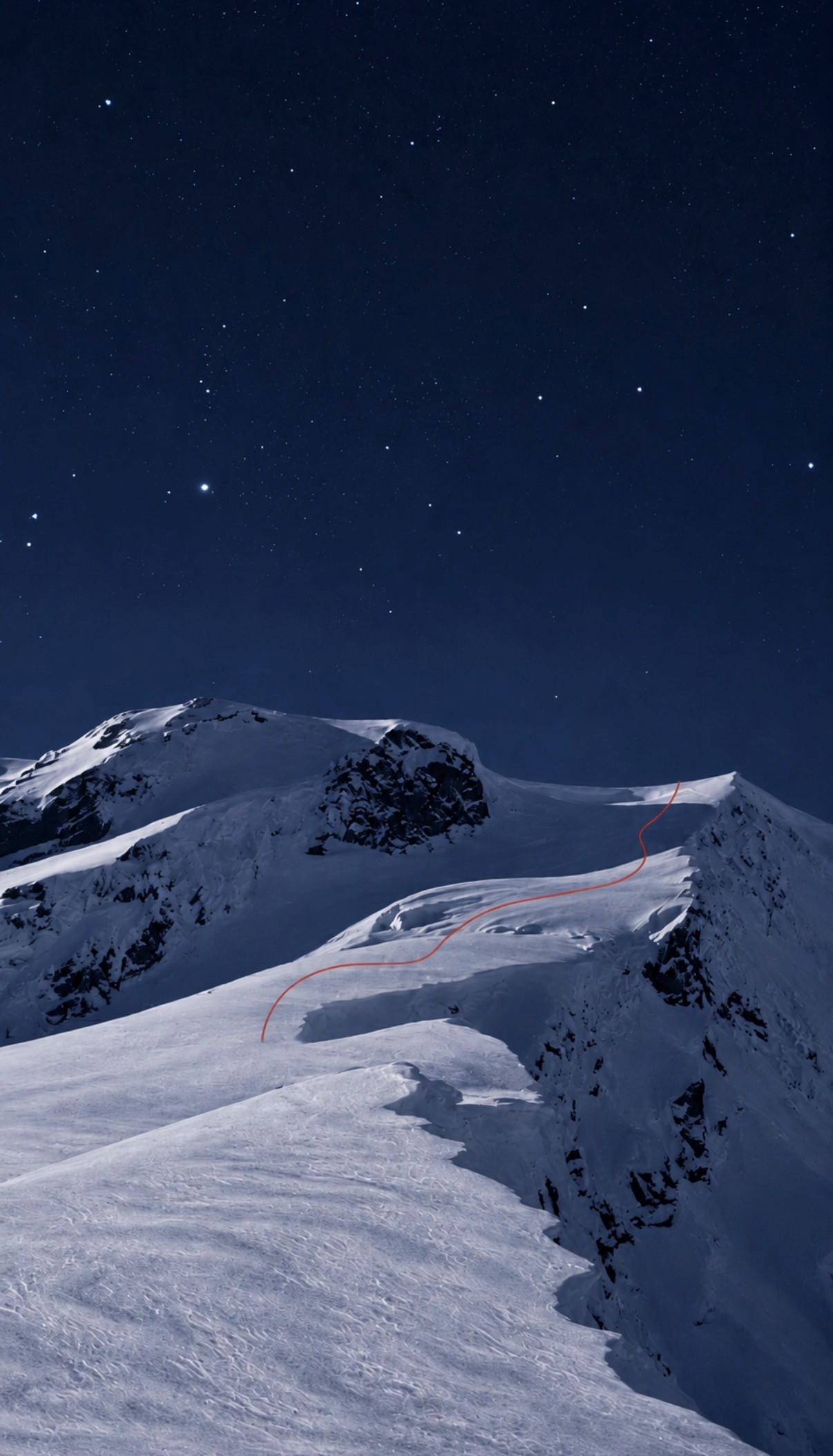
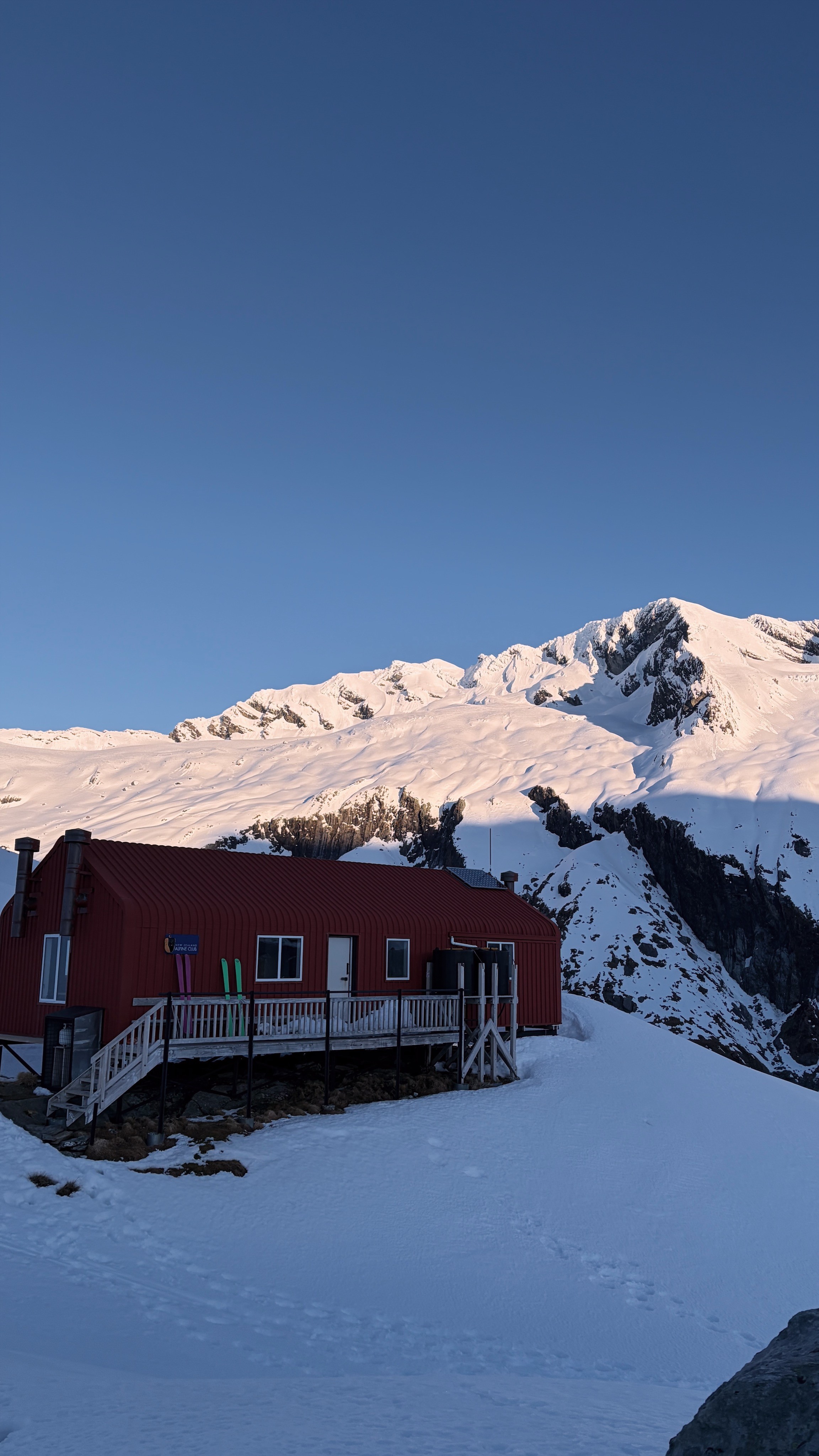
Into French Ridge
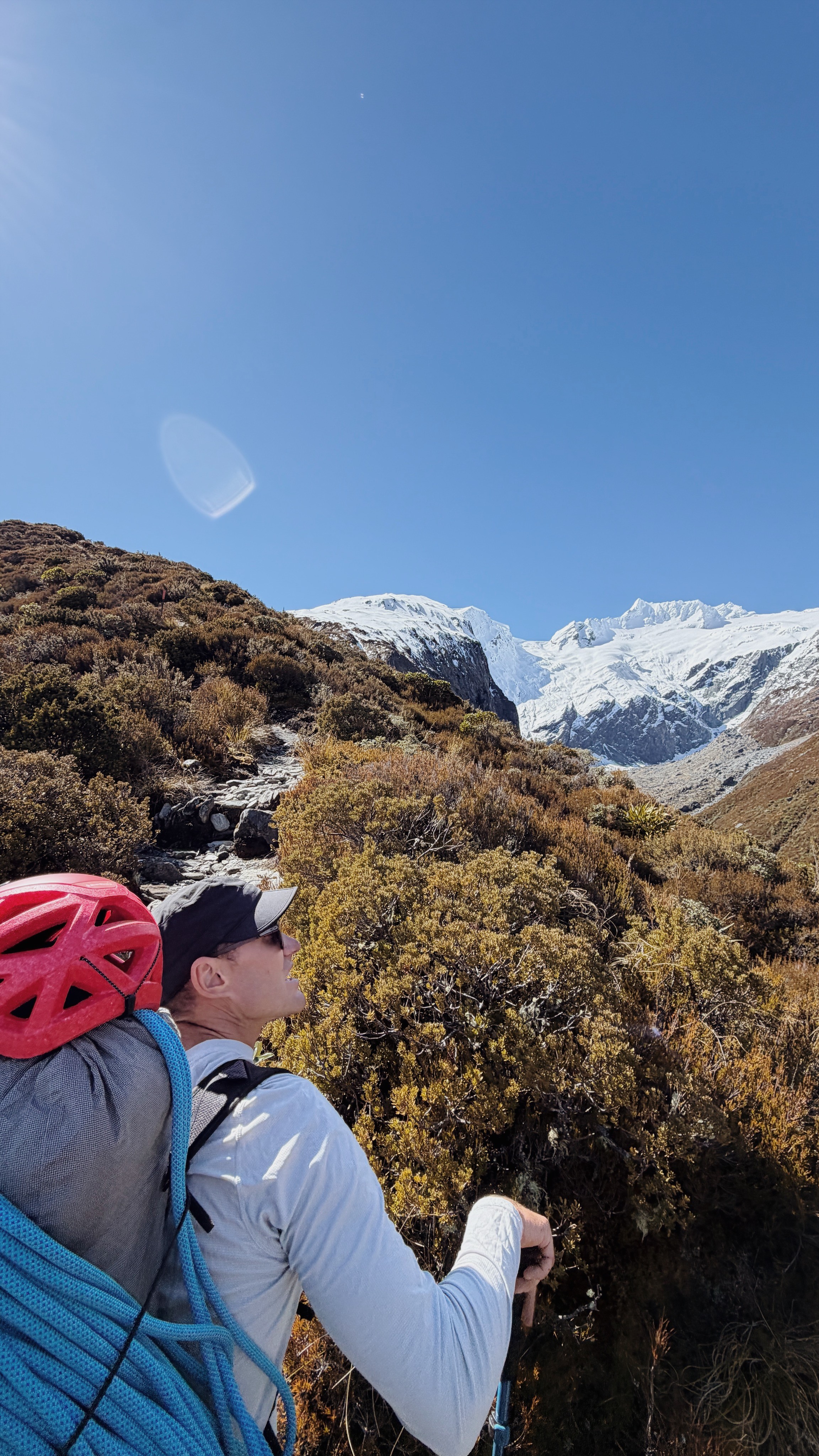
Tuesday started with a 10 km bike ride towards Aspiring Hut. We left the bikes there, knowing they would be waiting for us at the end, and swapped pedalling for the climb to French Ridge Hut. We had packed for three days, so we weren't travelling light. Dad and I each had about 25 kg on our backs, including rope and glacier gear, axes, avalanche kit, boots, warm layers, food and cookers. It was the sort of load that made us aware of every metre we gained.
The walk grew steeper as we headed up towards French Ridge. By the time we were on the upper track, the first day's climbing added up to around 1,200 m. The afternoon had softened the snow enough that we could get through without spikes. It made that stretch feel fairly straightforward, although we would discover the next morning how different the very same ground could be.
We reached French Ridge Hut at around 2 pm, early enough to have some food and still make use of the afternoon. About 100 metres from the hut we found a face where we could practise. We roped up for glacier travel and worked through crevasse rescue, getting the systems fresh in our heads before going higher. It was good to do the slow, careful practice while we had time to stop and talk everything through.
That evening we played Carcassonne with people we had met at the hut. Two other groups were there to climb Aspiring in the morning. I liked that contrast: a board game on the table, and everyone knowing the next day would start in the dark.

Over the Quarterdeck
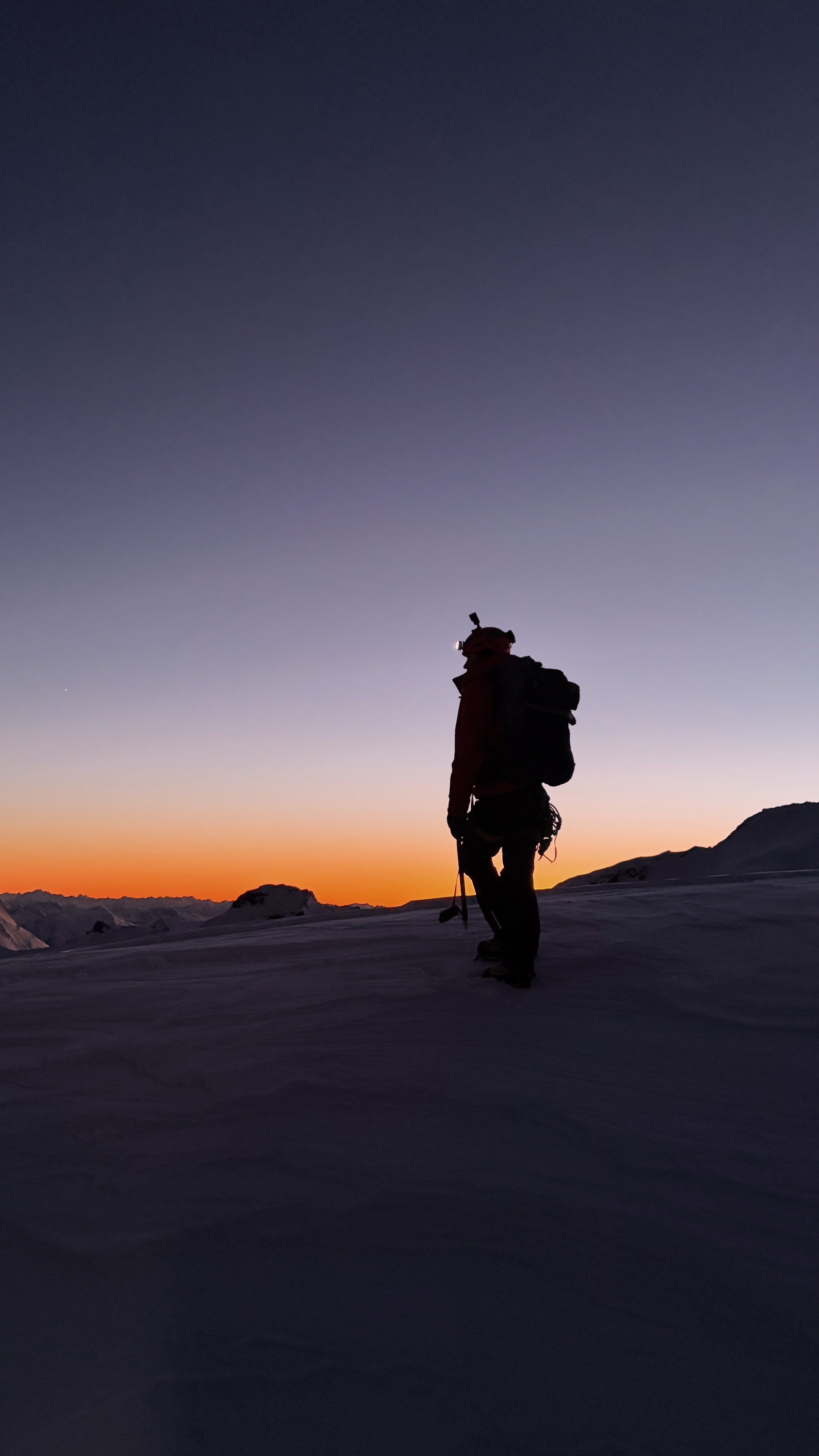
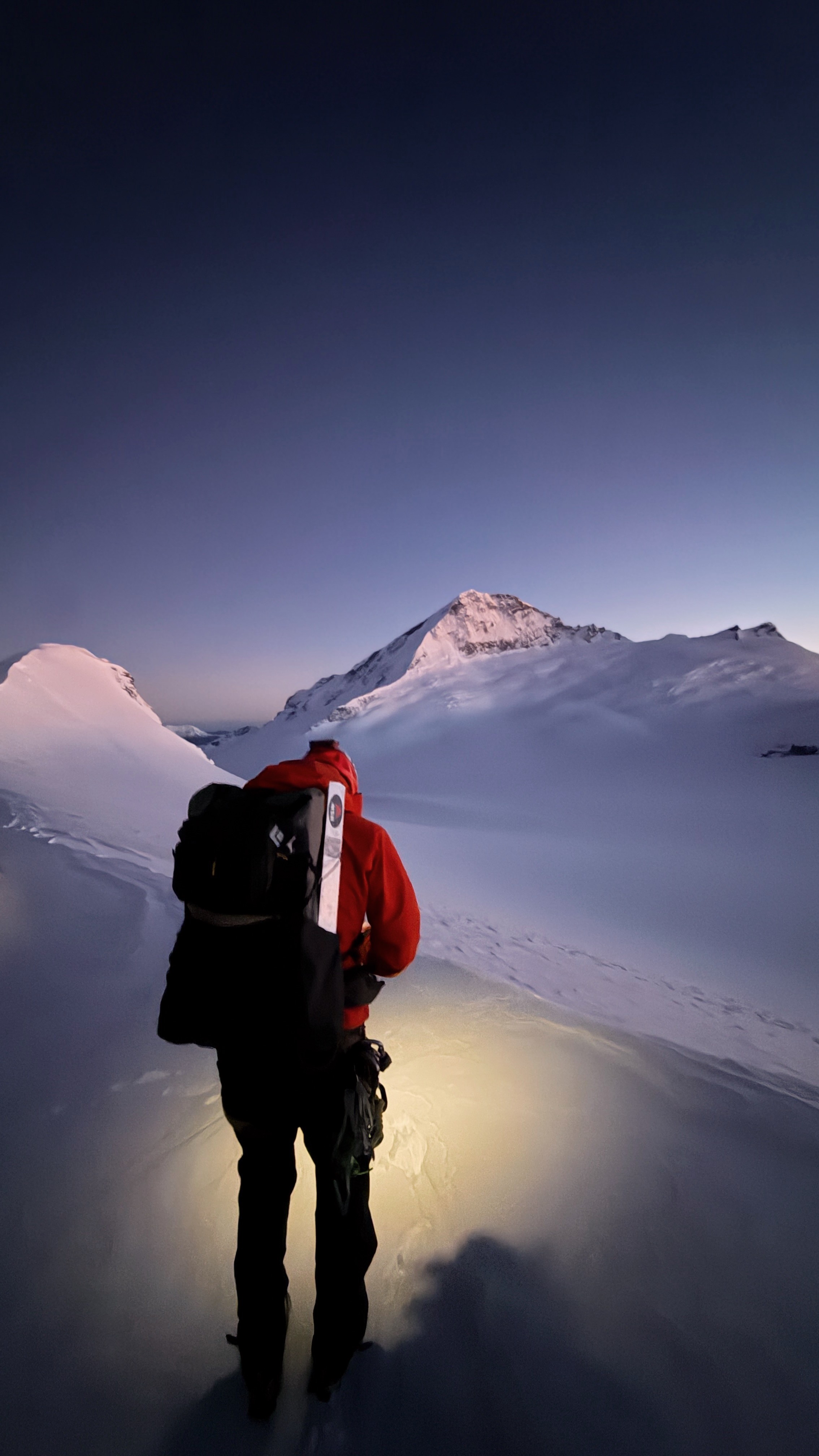
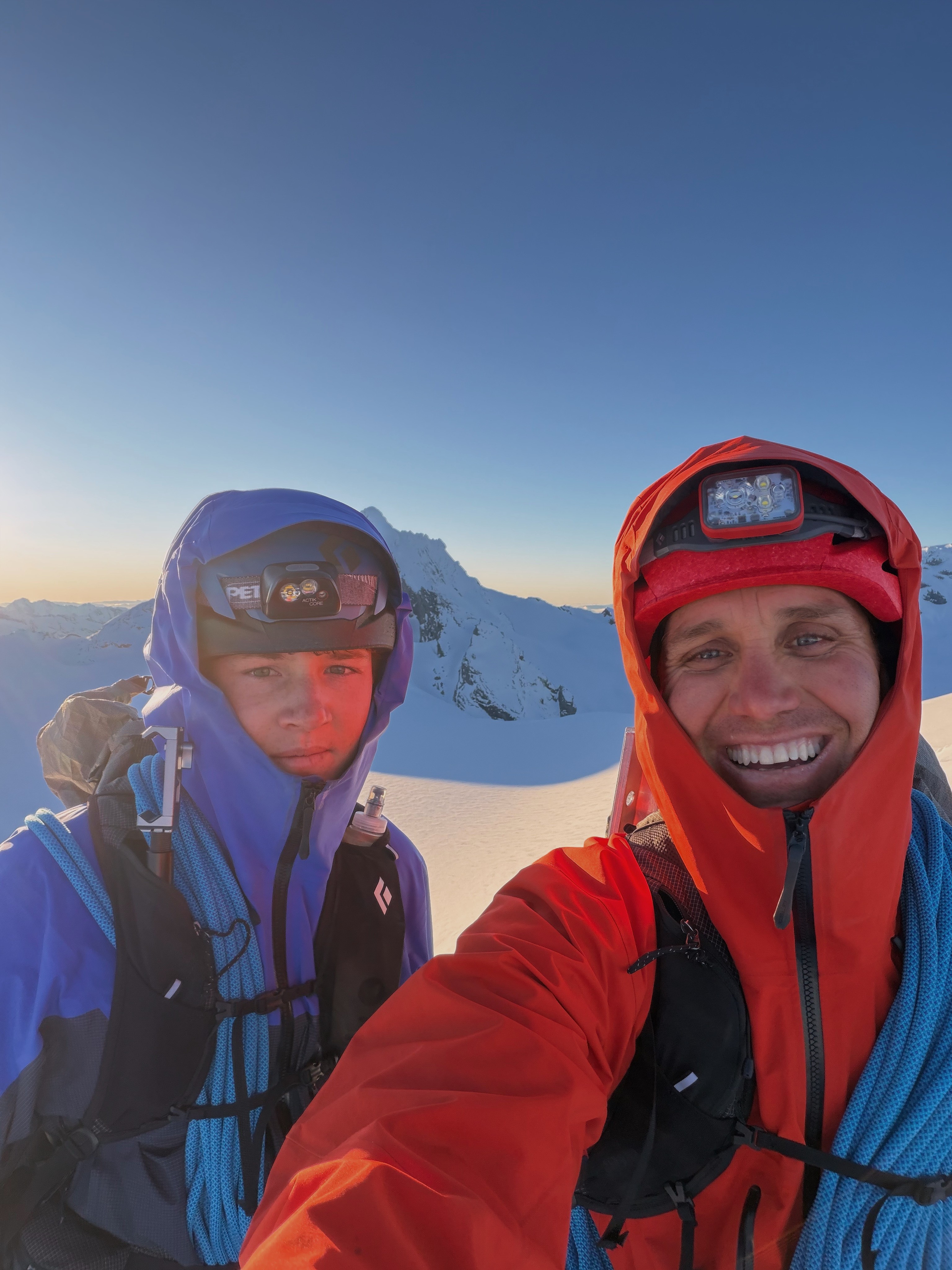
We woke at around 4 am on Wednesday. The Aspiring groups had already left by the time Dad and I were ready, and we set off at about five. It was still dark as we made our way towards the Quarterdeck and Mount French.
There were patches of bootpack to follow, but for much of the climb the snow was firm. The conditions were good and we could keep moving, though the mountain still had our attention. Big chunks of ice hung over parts of the route, and avalanches were always in the back of my mind. The ground under our feet could feel solid while I was still thinking about what was above us.
We reached the top of the Quarterdeck at around 7:20 and stopped to look at the rest of our plan. Mount Avalanche had been the bonus peak, but the deep snow on it looked like a lot of bootpacking. We had packed gear for three days, yet our food was looking light for another night. Rather than stretch the trip, we decided to focus on Mount French and head back out that day.
At around 7:50 we reached the summit of Mount French. It had been a quick push from the Quarterdeck, but it felt like the centre of the whole trip. The bike in, the heavy climb to the hut and the afternoon on the rope had all led up to that morning. We turned back towards French Ridge Hut and were there by about 10:30. A big lunch felt well earned, even with the long walk out still ahead of us.
The Long Way Home
After lunch we stepped onto an upper track that felt different from the one we had climbed the afternoon before. The snow had been soft on the way up. Now it was hard ice, and that section needed microspikes or crampons. The route was the same, but the time of day had changed how we had to move on it.
We carried on down to the valley and back towards the bikes. By then the distance was starting to show in my feet. Blisters made the final walking kilometres less enjoyable, and the day’s numbers were bigger than our early return to the hut made them sound: 18.7 km on foot, 6 hours 50 minutes moving, about 1,000 m of ascent and 2,100 m of descent.
At last we reached the bikes. The final 10 km could have been a grind, but a strong tailwind pushed us back to Raspberry Flat in around 25 minutes. After all the careful steps on ice and the blistered walk out, it was a pretty good way to finish. We came home a night earlier than planned and left Mount Avalanche for another time. With the skills practice, a night at French Ridge Hut and Mount French’s summit, it still felt like a proper wee mission.
Gear We Brought
The same core kit as our Esquilant Bivvy trip, plus extra glacier and avalanche equipment.
Clothing Layers
Waterproof shell
Arc’teryx Men’s Alpha SV Jacket – the benchmark GORE-TEX Pro alpine hardshell, fully waterproof and built for exposure

Down jacket / puffer
Arc’teryx Men’s Nuclei Hoody – lightweight synthetic-insulated puffer, warm even when wet

Outdoor Research Men’s Helium Down Hoodie – 800+ fill lightweight down puffer
Insulated mid-layer
Mid-layer fleece
Black Diamond Coefficient LT Hybrid Hoody (Men’s) – breathable hybrid mid-layer

Black Diamond Alpenglow Pro Hoody (Men’s) – warm fleece option

Base & Active Layers
Thermal top and leggings
Outdoor Research and Black Diamond base layers (merino / synthetic)
Black Diamond Alpine softshell pants – , with Outdoor Research rain pants over the top for the wet sections

Headwear & Hands
Beanie
Outdoor Research Vigor Plus Beanie – warm and versatile

Gloves
Black Diamond Guide Gloves – warm, weatherproof alpine gloves

Footwear
Asics Men’s Trabuco 14 – grippy trail shoes for the valley and the approach

Alpine boots for the icy upper section
Three pairs of socks
Safety & Navigation
Climbing helmet

Crampons
Black Diamond Sabretooth Pro Crampon

Ice axes
Black Diamond Venom Ice Axe / Hammer

Navigation
Garmin Fēnix 8 Pro – with uploaded GPX route – any watch works as long as it can navigate off course files
NZ Topo app on phone (offline maps)
Satellite messenger / PLB for backcountry safety
Glacier & Avalanche Gear
Rope
Harnesses
Locking and non-locking carabiners
Prusiks
Snow stakes
Avalanche transceivers
Shovels
Packs & Storage
Pack
Black Diamond Beta Light 45 Backpack – light, waterproof and able to hold our alpine gear

Dry bags
Sea to Summit dry bags – kept everything dry on the way up
Shelter & Sleep
Sleeping at French Ridge Hut, so no tent this trip
Sleeping bag
Sea to Summit Spark -9°C Down Sleeping Bag

Sleeping mat
Sea to Summit Insulated Mat

Food & Cooking
Real meals and freeze-dried meals
Jetboil
High-calorie snacks
Water
Soft flasks – carry water from the start
Other
GoPro for filming
Extras Worth Taking
Headlamp with spare batteries
Sunscreen
Powerbank (phone / Garmin backup)
First aid and emergency supplies
Small blister & repair kit
Originally written by Tarn Currie for Braden Currie. Read the original Mount French + Alpine Skills article.


